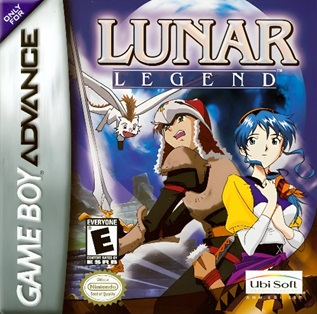
 USA
USA
Lunar Legend
Description
Lunar Legend (GBA, 2002 JP/NA): Role-playing game developed by Japan Art Media (also listed as Media Rings Corporation developer) for Game Boy Advance. Japan April 12, 2002 (published Media Rings), North America December 10, 2002 (published Ubisoft). Enhanced remake/re-telling of Lunar: The Silver Star (Sega CD 1992-1993), largely based on Lunar: Silver Star Story Complete (PlayStation 1999) with story/content changes. First English Lunar title not produced by Working Designs—instead localized by Ubisoft as part of short-lived early-2000s initiative breaking into Japanese game localization (alongside Grandia II, Jade Cocoon 2). First Lunar series entry on GBA—previously only Sega CD, Saturn, PlayStation.
Development announcement: November 2001 Japanese Weekly Famitsu magazine as "powered up" version of original Sega CD/32-bit versions, featuring changes benefiting portable play plus new story materials for veteran fans. Developed with Game Arts oversight—producer Yoichi Miyaji joined as consultant alongside Game Arts staff assisting project director Hisashi Sugawara crafting new vision retaining same feel as previous adaptations. Game Arts provided music, art, script for Media Rings' use. Originally scheduled March 2002 release, pushed to April 2002 for last-minute changes.
Ubisoft localization: Victor Ireland (Working Designs president) passed on project for undisclosed reasons—first break from series' traditional publisher. During 2002 IEMA Executive Summit, Ubisoft acquired publishing rights with initial November 2002 release date. Ubisoft approached Mickey Shannon, webmaster of Lunar series fansite LunarNET, creating/hosting official English page on his server rather than developing own website. Ubisoft's script remained closer to original Japanese versus Working Designs' extensive humor/pop culture references/altered pacing, retaining character names (Alex, Luna) while streamlining dialogue for improved flow/brevity. Technical hurdles accommodating English text within GBA's fixed-size dialogue constraints—18-20 characters per line (adequate Japanese, inadequate English versus Silver Star Story Complete's ~35 characters).
Story: World of Lunar (habitable moon orbiting uninhabitable planet "The Blue Star"). Protagonist Alex—young boy from remote village Burg dreaming becoming legendary Dragonmaster like deceased hero Dyne. Accompanied by childhood friend Luna (mysterious princess), flying cat-like sprite Nall, wizard Nash requesting escort to nearby shrine. Adventure begins encountering forces threatening world. Must find four powerful dragons completing trials to become Dragonmaster, earning title Guardian of Goddess Athena. Along journey, recruits companions: Ramus (merchant), Mia (mage), Jessica (priestess using claw weapon in GBA version—change from originals), Kyle (warrior). Battles manipulative Emperor Ghaleon attempting discovering/abusing hidden power Luna holds. Classic fantasy adventure with engaging twists, clear character motivations, comic relief moments. Charming characters, endearing plot, beautifully-reimagined world.
GBA technical constraints/compromises: Limited 8-megabyte cart size necessitating significant feature omissions. Voice acting entirely removed—all character interactions conveyed through text dialogue boxes (standard Lunar series feature eliminated). Full-motion video (FMV) cutscenes removed—original Sega CD/PlayStation's voiced cinematic sequences replaced by still images from Silver Star Story Complete's animated videos appearing at certain points providing cinematic feel. Real-time cutscenes utilizing larger, more detailed character sprites telling story—sprite-based scenes replacing anime sequences (Phantasy Star-esque stills). Audio downgraded: Orchestral scores of earlier releases substituted with MIDI-like chiptune tracks synthesized via GBA's sound chip—resulting tinny quality.
Music sounds muted through weak GBA speaker—best experienced via headphones/external speakers. Luna's singing, Alex's ocarina sound especially poor. Generic battle sounds, forgettable music. Working Designs' voice lines/battle callouts gone. Battery-backed save system allowing saves anytime.
Streamlined algorithms reducing load times versus console counterparts. GBA's 15-bit color depth—reduction from PlayStation's broader palette but brighter than some early GBA titles (not washed out).
Graphics/presentation: Nearly complete rework character/enemy sprites—massive improvement over Sega CD/PlayStation originals. Gone inscrutable squat little figures distinguishable mainly by hair colors—replaced by much larger, more detailed sprites with slightly realistic proportions, actual facial features. Detailed portraits, animations surpassing original versions, fluid movements. Charming, well-animated, colorful character designs effectively conveying emotions. Described as "one of prettiest RPGs to hit GBA"—visual facelift elevating game in-line with contemporary GBA RPGs while retaining familiarity. Pixel artistry. 2D environments, traditional RPG presentation. Character portraits based on Saturn version art style. Still images beautifully presented though implementation could have been better.
Gameplay changes unique to GBA version: Battle system modified—characters no longer move across battlefield attacking enemies (signature Lunar feature eliminated). Instead characters attack from positions, retreat to original spots after attacking (Final Fantasy-esque jumping backwards). Change streamlines battles but criticized for drawing combat out, especially late-game with multiple attacks per turn. Sideview battle format versus original's movement/positioning system—necessitated by smaller screen real estate combined with larger detailed character sprites. Random encounters returned (versus Silver Star Story Complete's visible enemies)—more tedious than previous entries. Arts Gauge/Special Power Moves system—new orange/yellow bar beneath each character's HP/MP bars. Once replenished, unleashes ultra-powerful special moves ("Limit Breaks" style). Can change by equipping certain items. Virtually useless against bosses according to some. Zone attacks maintained—spells altered working with battle constraints (Nash's ThorBolt attacks one enemy rank versus Silver Star Story Complete's Thunderbolt single enemy). Monster Card collection—defeated enemies drop cards, collectible/buyable/sellable/tradeable throughout game. Added depth for completionists. Explorable world map eliminated—linear "dot-to-dot" movement between locations. Alex icon moves like Grandia rather than freely walking. Lack overworld traversal makes game progress faster clip. 44 equippable accessories (versus 20 in Silver Star Story). Dragon Ring equippable by Alex (DEF+1, RES+20). Auto battle feature. Equipment comparisons showing green (effectiveness increase), red (decrease). L/R buttons cycle through characters in shops/menus—saves messing around when shopping. Player-friendly conveniences. Some item names changed (healing herbs became healing gum).
Difficulty significantly reduced: Neutered challenge from original—very easy first playthrough. Low difficulty criticized lacking meaningful challenge. Party selection mistakes not fatal—resurrections affordable. Described as "suitable for players of all levels and ages." Perfect beginner RPG. Later complaints game too simple versus original's brutal difficulty curve.
New content additions: New story materials for veterans—expanded narrative elements. Festival in Burg seen rather than just hearing about. Alex's mother more than sprite. Sub-Vane boss rather than Trial Cave. Nash also looking to become Dragonmaster (from Lunatic Festa CD). Hidden secrets: hidden chests, Protector's Cave, special equipment sets, chest in Ramus's shop. Bromides expanded—heroines (Luna, Mia, Jessica) and villainesses (Phacia, Xenobia, Royce). Unlike later games, Mia's Bromide purchasable in Vane item shop, equippable by Nash without stat bonuses.
Length: 18.5-20 hours main objectives focus, 28.5-30 hours 100% completion—shorter side versus typical RPGs. Time well spent according to most reviewers. Some found lengthy at almost 30 hours yet still quite easy.
Sales: Japan debut week 7,488 units (Famitsu/IGN data). Lifetime Japan approximately 13,500 units—underperformance amid crowded GBA RPG market dominated by Final Fantasy Tactics Advance, Golden Sun. North America $38,461 revenue during initial NPD-tracked period early 2003—similarly restrained market penetration. Despite modest individual performance, helped sustain broader Lunar series interest (series cumulatively sold over 1 million copies across platforms).
Critical reception: Metacritic 79% (based on 20 critic reviews—80% positive, 15% mixed, 5% negative). Japanese Weekly Famitsu 30/40 (above-average from four reviewers). Electronic Gaming Monthly 80/100—"one of prettiest, most involving RPGs to hit GBA." GameSpot "fun and engaging"—criticized low difficulty, audio quality below standard. Runner-up GameSpot's annual "Best Role-Playing Game on Game Boy Advance" award (lost to Tactics Ogre: The Knight of Lodis). GameNow 91/100—"one of finest games in genre." Nintendojo 90/100—"perfect RPG for anyone" but advised against replacing PlayStation version. Gamers' Temple 83/100—20 hours well spent. NetJak 45/100—"felt nothing" after completion, no character connection (sole negative review). RPGFan—mostly positive acknowledging first portable attempt capturing Lunar's magic succeeded despite platform limitations, impressive though little reason revisiting today. GamePro—inferior to earlier versions, "definitely recommended for anyone who didn't live through Lunar phenomenon" but veterans should skip.
Praise: Gorgeous sprite work—"prettiest GBA RPG," larger detailed sprites with superior coloring/shading versus Sega CD, charming well-animated designs. Animations surpass originals—fluid character movements conveying emotions effectively. Faithful story adaptation—engaging fantasy plot with twists, character motivations, comic relief. Portability—ideal on-the-go RPG for short sessions/travel, enhancing GBA library. Player-friendly features—auto battle, equipment comparisons, L/R menu cycling, save-anywhere system. Accessible—suitable all skill levels/ages, perfect beginner RPG. Character variety—charming cast maintaining series spirit. Interesting additions—hidden secrets, bromide collection, new equipment, story expansions. Lack overworld speeds progression for some. Monster cards add collection depth. Translation closer to Japanese original versus Working Designs' pop culture references.
Criticism: Ubisoft localization horrible/sloppy/unpolished—inaccuracies, awkward phrasing, grammatical errors. Working Designs' personality/polish replaced with rushed translation (few months between Japanese/NA versions). Character limit constraints producing inadequate English (18-20 characters versus 35 needed). Nintendo censorship likely mandating alcohol references changed to apple cider/chocolate. Translation described among worst RPG localizations for some, acceptable for others prioritizing fidelity over flair. Audio quality severely downgraded—tinny chiptune music versus orchestral originals, muted through GBA speaker, Luna's singing/Alex's ocarina poor. Forgettable generic soundtrack lacking impact. Voice acting/FMV cutscenes removed—signature Lunar series features eliminated breaking cinematic immersion. Sprite cutscenes adequate replacement but lack anime production values. Battle system changes controversial—removed movement/positioning (defining Lunar feature), Final Fantasy-style jumping backwards drawing combat out tediously. Random encounters more annoying than visible enemies. Ultra-low difficulty—neutered challenge, no meaningful resistance, special moves useless versus bosses. Too easy for series veterans. Shorter length versus predecessors. Some weapon changes nonsensical (Jessica using claw). Item name changes silly (healing gum).
Awards: GameSpot runner-up "Best Role-Playing Game on Game Boy Advance 2002" (lost to Tactics Ogre: The Knight of Lodis).
Legacy: Fourth iteration Lunar: Silver Star (after Sega CD original, Saturn remake, PlayStation version)—established viability bringing classic console RPGs portably despite compromises. Proved GBA capable handling story-driven JRPGs with proper adaptation. Demonstrated risks/rewards handheld remakes—technical limitations necessitating significant cuts while portability/visual upgrades providing new value. First non-Working Designs English Lunar—marked shift from series' traditional eccentric localization style toward faithful conservative translations. Ubisoft's brief Japanese localization initiative largely unsuccessful—Lunar Legend prime example why efforts short-lived (translation quality issues, technical constraints). Served gateway introducing new audiences to Lunar series via affordable accessible handheld entry—ideal first experience for newcomers versus veterans comparing unfavorably to originals.
Divided fanbase: Veterans comparing to Sega CD/PlayStation versions generally disappointed—too many compromises, missing signature features, inferior presentation. Newcomers/GBA-focused players often loved game—one of best available RPGs on platform, charming story, gorgeous sprites, perfect portable format. Debate continues whether GBA constraints justified changes or if developers should have aimed higher. Community split between appreciating what Media Rings accomplished within limitations versus lamenting what could have been with different approach.
Historical significance: Documented first portable Lunar attempt—preceding PSP's Lunar: Silver Star Harmony (2009). Established template portable JRPG remakes balancing technical constraints with presentation upgrades. Proved large-sprite approach viable for storytelling despite removing tactical movement. Demonstrated GBA's strengths (sprite art, portability) while exposing weaknesses (audio, storage). Among earliest CD-ROM-to-cartridge adaptations requiring dramatic content reduction. Early Ubisoft JRPG localization—part of larger failed initiative entering Japanese market (2002-2003 Grandia II, Jade Cocoon 2). First break from Working Designs after decade-long Lunar partnership—industry milestone showing publisher transitions possible if risky.
Enduring appeal: Remains charming time capsule early-2000s portable RPGs—simpler era valuing accessibility over complexity. Frequently cited among "underrated GBA RPGs" or "hidden gems"—overshadowed by Golden Sun, Fire Emblem, Final Fantasy Tactics Advance but offering distinct identity through Lunar pedigree. Collector's item for Lunar series completionists and GBA enthusiasts. Nostalgia factor strong for players experiencing Lunar first time via GBA—personal gateway despite technical inferiority. Visual standout—sprites frequently praised as among GBA's prettiest RPG artwork.
Accessibility makes excellent entry point for younger players/JRPG newcomers intimidated by complex modern titles. Recommended primarily for: Lunar newcomers, GBA collectors, players valuing portability over production values, beginners seeking approachable JRPG. Veterans encouraged seeking Sega CD/PlayStation versions instead.
Broader Lunar series: Lunar series created Game Arts/Studio Alex—tales set on habitable moon "Lunar" orbiting uninhabitable planet "The Blue Star." Original two games (The Silver Star 1992, Eternal Blue 1994) became two highest-selling Sega CD titles Japan. Multiple remakes across platforms. Lunar series sold over 1 million copies total, placing among best-selling Japanese RPG franchises.
Subsequent releases:
- Lunar: Dragon Song (Nintendo DS 2005—critically panned 58% GameRankings),
- Lunar: Silver Star Harmony (PSP 2009-2010),
- Lunar: Remastered Collection (2025 Windows/PlayStation/Xbox).
Media Rings/Japan Art Media never developed another Lunar title—one-off GBA adaptation.
What Members Paid (Anonymous)
Recent Purchases
Shopping Assistant
Use our AI-powered shopping assistant to find Lunar Legend across multiple online marketplaces including eBay, Mercari, Amazon, and more.