 JPN
JPN
Dragon Quest Characters: Torneko's Adventure 3
ドラゴンクエストキャラクターズ トルネコの大冒険3
Description
Dragon Quest Characters: Torneko's Adventure 3 (ドラゴンクエストキャラクターズ トルネコの大冒険3) - The Merchant's Ultimate Challenge
Released exclusively in Japan on June 24, 2004, Dragon Quest Characters: Torneko's Adventure 3 represents the culmination of the beloved merchant's roguelike trilogy on Game Boy Advance. Developed by Matrix Software and published by Square Enix (following the 2003 merger), this challenging mystery dungeon crawler refined the formula established by its predecessors while introducing innovative multiplayer features, expanded item systems, and the series' most punishing dungeons. Released simultaneously with a PlayStation 2 version, the GBA port offered portable access to Torneko's most ambitious adventure, featuring cross-platform compatibility for shared dungeon exploration. Despite its mechanical depth and polish representing the peak of handheld Mystery Dungeon design, Torneko 3 remained Japan-exclusive, denying Western audiences the definitive portable roguelike experience that pushed the GBA hardware to its limits.
Story and Setting
Torneko's Adventure 3 finds the rotund merchant once again drawn from peaceful retirement into extraordinary circumstances. Several years after the mysterious dungeon incidents of Torneko 2, strange phenomena plague the land—reality itself seems unstable, with dungeons appearing and vanishing unpredictably, time flowing incorrectly, and spatial distortions creating impossible geography.
The narrative begins when Torneko's son Popolo (now a young adventurer himself) disappears while investigating these anomalies. Determined to rescue his son and uncover the truth behind the reality distortions, Torneko embarks on his most dangerous journey yet. This personal stakes elevation—rescuing family rather than helping strangers—gives Torneko 3 emotional weight exceeding its predecessors.
The story unfolds across multiple interconnected narrative threads. Torneko encounters other adventurers trapped in distorted dungeons, discovers ancient civilizations whose magical experiments caused the current crisis, and gradually unravels a conspiracy involving forbidden time manipulation magic. The episodic structure returns, but stronger narrative continuity connects individual dungeon expeditions into a cohesive overarching plot.
New to Torneko 3 is the "Fushigi no Dungeon" (Mysterious Dungeon) network—a magical connection linking all the world's mysterious dungeons through a central nexus. This hub area serves as the main base of operations, featuring expanded town facilities, multiple NPC questgivers, and portals to various dungeon types. The hub's interconnected nature creates a more unified game world compared to Torneko 2's separate dungeon instances.
The tone maintains Dragon Quest's characteristic blend of lighthearted humor and genuine danger. Torneko's bumbling charm contrasts sharply with the lethal dungeon environments, creating comedic relief during tense moments. However, the family rescue narrative adds emotional sincerity, with genuinely touching reunions and character development for both Torneko and Popolo.
The setting explores diverse environments beyond traditional fantasy dungeons. Players venture into technological ruins from ancient civilizations, navigate dreamscape dungeons defying physical laws, explore elemental planes of pure fire or ice, and descend into abyssal depths where reality itself breaks down. This environmental variety prevents visual monotony across the extensive campaign.
Enhanced Mystery Dungeon Mechanics
Torneko 3 refines the roguelike framework established by previous entries while introducing significant mechanical innovations:
Core Roguelike Elements (maintained from predecessors):
- Turn-Based Grid Movement: Time advances only when Torneko acts, creating tactical chess-like positioning
- Procedural Generation: Every floor randomly generates, eliminating memorization-based strategies
- Permadeath: Death strips all carried items and money, preserving only warehouse-stored possessions
- Hunger System: Constant fullness depletion forces food management throughout expeditions Limited Inventory: Restricted carrying capacity creates constant item prioritization puzzles
- Item Identification: Most discovered items appear unidentified, requiring careful testing or identification tools
New Mechanical Additions: Tag System: Torneko 3's headline feature allows recruiting a second character—Popolo—creating tag-team dungeon exploration. Players switch between Torneko and Popolo at will, each maintaining separate inventories, equipment, and levels. This dual-character system introduces new strategic possibilities:
Character Specialization: Build Torneko as a tank with heavy armor while developing Popolo as a magic user with offensive spells
Inventory Doubling: Two characters mean twice the inventory space, easing the constant carrying capacity pressure
Tactical Switching: Swap to the better-equipped character for specific encounters—use Popolo's magic against physically resistant enemies, employ Torneko's melee strength against magic-immune foes
Emergency Backup: If one character dies, the other can potentially complete the dungeon, reducing total-party-wipe scenarios
Separation Mechanics: Some dungeons force character separation, requiring solo navigation until reunion
The tag system fundamentally alters strategy formulation. Equipment distribution between characters, deciding who carries critical items, and managing two separate progression tracks create additional complexity rewarding careful planning.
Advanced Synthesis: Building on Torneko 2's synthesis system, Torneko 3 expands item combination mechanics substantially:
- Multi-Item Fusion: Combine 3+ items simultaneously, creating powerful hybrid equipment
- Skill Transfer: Merge weapons to transfer special abilities between equipment types
- Stat Stacking: Repeated synthesis compounds stat bonuses, enabling min-maxed super-equipment
- Synthesis Failures: Some combinations fail catastrophically, destroying materials permanently
- Recipe Discovery: Hidden synthesis formulas unlock through experimentation or NPC hints
The expanded synthesis creates an intricate crafting metagame. Optimizers spend hours perfecting equipment combinations, documenting successful recipes, and grinding materials for ultimate gear creation.
Trap Variety and Interaction: Torneko 3 dramatically expands trap systems beyond simple damage floors:
Beneficial Traps: Some traps provide advantages—experience gain floors, stat boost tiles, free item generation
- Trap Manipulation: New items allow moving, disabling, or triggering traps strategically
- Trap Crafting: Create and place custom traps, using dungeon hazards as weapons
- Trap Chains: Triggering one trap can cascade into chain reactions affecting entire rooms
Traps transition from pure hazards to strategic tools. Skilled players bait enemies into trap tiles, create trap gauntlets funneling monsters through damage zones, or manipulate beneficial traps for stat farming.
- Day/Night Cycle: Time progression affects dungeon properties:
- Monster Variations: Different enemy species appear during day versus night
- Item Availability: Certain items only spawn during specific time periods
- NPC Schedules: Dungeon merchants and special NPCs follow daily routines
- Environmental Changes: Lighting conditions, weather effects, and hazard intensity vary with time
The day/night system adds temporal strategy layers. Players time dungeon entries to coincide with favorable conditions or deliberately venture during dangerous nights for rare spawns.
Expanded Combat Systems
Combat mechanics receive substantial depth additions while maintaining turn-based tactical foundations:
Special Techniques: Characters learn unique special moves beyond basic attacks:
- Torneko's Merchant Skills: Appraisal abilities identifying items mid-dungeon, price manipulation affecting shop interactions, coin-based attacks converting money into damage
- Popolo's Magic Arsenal: Diverse spell catalog including offensive magic, party buffs, utility teleportation, and environmental manipulation
- Weapon Arts: Equipment-specific special attacks—sword techniques, spear thrusts, hammer smashes—each with unique tactical applications
Stance System: Characters adopt combat stances modifying basic attack properties:
- Aggressive Stance: Increased damage output but reduced defense
- Defensive Stance: Enhanced blocking but slower attack speed
- Balanced Stance: Standard combat capabilities
- Evasive Stance: Improved dodge rate at cost of offensive power
Stances adjust dynamically mid-combat, allowing tactical adaptation to evolving battlefield conditions.
Combo Mechanics: Consecutive successful attacks build combo counters, unlocking powerful finisher moves. Maintaining combos requires positioning preventing enemy retaliation, creating risk-reward dynamics where aggressive play yields damage bonuses but exposes characters to counterattacks.
Enemy AI Enhancements: Monster behavior shows increased sophistication:
- Pack Tactics: Certain enemy types coordinate attacks, flanking or focusing fire on weakened characters
- Spell Interruption: Enemies target vulnerable casting characters, disrupting spell completion
- Item Stealing: Thief-type monsters pilfer inventory items, requiring immediate recovery or permanent loss
- Status Exploitation: Enemies capitalize on afflicted characters, prioritizing confused or paralyzed targets
Advanced AI creates genuine tactical challenges where positioning, status effect management, and threat prioritization determine survival.
Boss Battle Innovation: Major encounters introduce multi-phase mechanics:
- Phase Transitions: Bosses transform at health thresholds, gaining new abilities or changing tactical profiles
- Environmental Interaction: Arena hazards become tactical elements—lure bosses into traps, exploit terrain for advantages
- Minion Summoning: Bosses spawn reinforcements, forcing multi-target management
- Pattern Recognition: Learn and exploit boss attack sequences for damage windows
Boss encounters feel legitimately epic rather than stat-checking damage races. Preparation, pattern memorization, and execution quality determine victory over simple level/equipment advantages.
Multiplayer and Connectivity
Torneko 3's groundbreaking feature for the Mystery Dungeon series is full cooperative multiplayer via link cable: Co-op Dungeon Exploration: Two players explore procedurally-generated dungeons simultaneously, each controlling their own character. This transforms the traditionally solo roguelike experience into cooperative adventures:
- Shared Loot: Item distribution requires cooperation and communication
- Tactical Coordination: Flanking maneuvers, coordinated attacks, and covering retreats become viable strategies
- Revive Mechanics: Downed players can receive revival from active partners, mitigating permadeath severity
- Synchronized Progression: Both players gain experience and items, maintaining level parity
Rescue System: When solo players die in dungeons, they generate rescue codes. Other players input these codes, entering "rescue dungeons" matching the original's layout to recover the fallen adventurer's items. This community-driven rescue system:
- Item Recovery: Successful rescues return lost equipment to the original player
- Rescue Rewards: Rescuers receive gratitude items and experience
- Code Sharing: Players share rescue codes via online forums, creating cooperative communities
- Challenge Rescues: Attempting rescues for high-level dungeon deaths provides extreme difficulty tests
The rescue system brilliantly addresses roguelike permadeath frustration while maintaining challenge integrity. Players can recover from catastrophic losses through community assistance rather than accepting total defeat.
PlayStation 2 Connectivity: The GBA and PS2 versions feature cross-platform functionality:
- Data Transfer: Move save files between platforms via link cable
- Exclusive Dungeons: Each version contains platform-specific content unlockable through transfers
- Graphical Comparison: Experience the same dungeons with GBA sprite graphics or PS2 3D rendering
This connectivity demonstrates Square Enix's commitment to platform synergy, though realistically, few players owned both versions for transfer exploitation.
Dungeon Variety and Progression
Torneko 3 features the series' most extensive dungeon catalog, offering diverse challenges catering to various playstyles:
Story Dungeons (Main Campaign):
- Tutorial Dungeons: 10-15 floors introducing mechanics gradually
- Mid-Game Challenges: 20-40 floor dungeons requiring established item knowledge
- Climactic Dungeons: 50+ floor endurance tests demanding perfect resource management
- Final Dungeon: Multi-segment mega-dungeon concluding the narrative
Post-Game Content (Unlocks after story completion): Challenge Dungeons:
- Level 1 Restart: Begin at level 1 regardless of town level, pure skill tests
- Item Lockout: Cannot bring external items, survival using only dungeon loot
- Time Attack: Limited turn counts forcing efficient navigation
- Ironman Mode: Single-life attempts where any death permanently deletes save files
- Monster-Only: Control recruited monster allies instead of human characters
Endless Dungeons:
- The Abyss: 99+ floors of escalating difficulty
- Random Roulette: Completely randomized rules changing every few floors
- Boss Rush: Sequential boss battles without rest periods
- Trap Paradise: Dense trap concentration creating hazard navigation puzzles
Themed Dungeons:
- Elemental Towers: Fire, Ice, Lightning, Earth—each emphasizing corresponding resistances
- Monster Houses: Every floor contains Monster House events
- Merchant's Paradise: Abundant shops and trading opportunities
- Synthesis Haven: Excessive materials enabling crafting experimentation
Special Event Dungeons:
- Seasonal Events: Time-limited dungeons appearing during specific calendar periods
- Rescue Missions: Community-driven dungeons generated from player deaths
- Tournament Dungeons: Competitive time-trial ranking events
The sheer dungeon variety ensures hundreds of hours of content. Completionists attempting every dungeon, challenge mode, and post-game content face monumental undertakings.
Item Systems and Progression
Torneko 3's item depth exceeds predecessors substantially, featuring the series' largest equipment and consumable catalog:
Equipment Categories (Expanded):
Weapons (100+ varieties):
- Swords: Reliable damage, balanced stats
- Spears: Two-tile range, tactical positioning advantages
- Axes: High damage, accuracy penalties
- Hammers: Wall destruction, special environmental interaction
- Whips: Multi-target arcs
- Staves: Magical charges, ranged spell effects
- Bows: Long-range physical attacks
- Claws: Rapid multi-hit combinations
- Unique Weapons: Dragon Quest legendary equipment with special abilities
Defensive Gear (80+ varieties):
- Shields: Damage reduction, some reflect projectiles
- Armor: Primary defense provider, elemental resistances
- Helmets: Minor defense, status immunities
- Accessories: Rings, amulets, bracelets—passive ability providers
Consumables (200+ types):
Food Items:
- Bread: Standard fullness restoration
- Onigiri: Filling and HP recovery
- Rare Delicacies: Massive fullness restoration plus stat boosts
- Rotten Food: Hunger restoration with negative side effects
Scrolls (50+ types):
- Identification Scrolls: Reveal unknown item properties
- Teleportation: Instant floor escape or targeted movement
- Monster Summoning: Spawn allies or enemies
- Blessing/Cursing: Modify equipment properties
- Mapping: Reveal entire floor layouts
- Synthesis: Enable item combination mid-dungeon
Potions (40+ types):
- Healing: HP restoration in various quantities
- Status Cure: Remove poison, confusion, paralysis
- Stat Boosting: Temporary or permanent attribute increases
- Dangerous Effects: Unknown potions risk harmful consequences
Seeds and Herbs (30+ types):
- Stat Seeds: Permanent attribute increases
- Medicinal Herbs: Basic healing
- Special Herbs: Unique effects—invisibility, giant transformation, shrinking
Special Items:
Storage Solutions:
- Pots: Store items freeing inventory space
- Bags: Specialized containers for specific item categories
- Preservation Jars: Prevent food spoilage
Utility Tools:
- Pickaxes: Mine walls creating shortcuts
- Lockpicks: Open locked chests and doors
- Torches: Illuminate dark floors
- Compasses: Point toward stairs or objectives
Transformation Items:
- Monster Meat: Transform into specific monsters temporarily
- Disguise Kits: Appear as different character classes
- Size Modification: Become giant or tiny with corresponding ability changes
Synthesis Materials:
- Ores: Metal materials for weapon enhancement
- Gems: Magical stones granting elemental properties
- Essences: Distilled monster powers transferable to equipment
The overwhelming item variety creates information mastery challenges. Veteran players memorize hundreds of items, their effects, optimal usage scenarios, and synthesis interactions. This knowledge accumulation represents significant progression beyond simple character leveling.
Item Identification Mastery:
- Torneko 3's unidentified item system reaches peak complexity. Items appear with generic descriptions—"Blue Potion," "Mysterious Scroll," "Ancient Sword"—concealing actual properties. - Players develop identification strategies:
Testing Methods:
- Safe Environment Testing: Use unknown items in controlled situations observing effects
- Enemy Testing: Throw unidentified items at enemies observing results
- Process of Elimination: Track identified items, deduce unknowns from remaining possibilities
- Identification Items: Precious scrolls or NPC services revealing properties safely
Risk Management:
- Critical Items: Reserve identification scrolls for potentially game-changing equipment
- Expendable Testing: Sacrifice less important unknown items to gather information
- Community Knowledge: Consult guides documenting item appearance patterns and effect probabilities
Curse Detection:
- Cursed Equipment: Locks onto characters preventing removal
- Curse Identification: Specific scrolls or NPCs detect curses before equipping
- Purification: Rare items remove curses restoring equipment usability
Mastering identification represents a significant skill component separating novices from experts. Expert players confidently navigate unknown item catalogues through accumulated pattern recognition and probability assessment.
Character Progression Systems
Multiple interconnected progression systems provide long-term development goals: Experience Levels:
- Town Level: Persistent character level maintained between adventures
- Dungeon Level: Temporary level gained within specific dungeons, reset upon exit
- Level Reset Dungeons: Challenge modes starting characters at level 1
Equipment Mastery:
- Proficiency Ranks: Extended equipment usage increases mastery levels
- Unlock Bonuses: Higher proficiency grants stat bonuses and special techniques
- Weapon Specialization: Focused equipment type usage unlocks unique abilities
Skill Systems:
- Active Skills: Learned through leveling, teachable through skill books
- Passive Abilities: Equipment-granted permanent effects
- Class Skills: Character-specific unique abilities
Monster Allies:
- Recruitment: Capture monsters through special items or battle conditions
- Monster Development: Allied monsters level independently
- Evolution Chains: Some monsters transform into stronger forms at specific levels
- Fusion: Combine allied monsters creating hybrid species
Permanent Stat Growth:
- Stat Seeds: Rare items providing permanent attribute increases
- Training Facilities: Town NPCs offering stat boosts for fees
- Achievement Rewards: Milestone accomplishments grant permanent bonuses
Collection Achievements:
- Item Catalog: Discovering every item type unlocks bonuses
- Monster Encyclopedia: Encountering all enemy species provides completion rewards
- Dungeon Completion: Clearing all dungeons grants ultimate equipment access
The layered progression creates constant advancement even during unsuccessful runs. Failed expeditions still contribute experience, item discoveries, monster encyclopedia entries, and skill unlocks—softening permadeath's sting through meta-progression. Warehouse and Economy Systems The warehouse returns with enhanced functionality:
Storage Management:
- Unlimited Capacity: Store infinite items removing previous storage limits
- Organization Tools: Categorize items by type, rarity, or custom tags
- Quick Access: Retrieve items rapidly without tedious menu navigation
- Remote Access: Certain dungeons allow mid-expedition warehouse interaction
Economic Systems:
Money Management:
- Gold Accumulation: Successful runs generate wealth through monster drops and treasure
- Banking: Deposit money in warehouse-linked banks preventing loss on death
- Investment: Purchase properties generating passive income
- Loan System: Borrow money for expensive purchases, repay with interest
Shop Interactions:
- Dungeon Shops: NPC merchants appear on random floors
- Price Fluctuation: Item costs vary based on dungeon depth and shop rarity
- Selling Strategy: Optimal loot-selling timing maximizes profits
- Merchant Discounts: Torneko's merchant background grants pricing advantages
Item Value Assessment:
- Appraisal: Identify item worth for selling decisions
- Rarity Evaluation: Understand which loot justifies inventory space
- Synthesis Economics: Calculate whether synthesis costs justify created equipment value
The economic depth adds strategic layers beyond combat and exploration. Wealth management, smart purchasing, and optimal selling contribute significantly to long-term success.
Visual and Audio Presentation
Torneko 3 pushes GBA hardware to display limits:
Graphical Enhancements:
- Detailed Sprites: Larger, more animated character and monster sprites
- Environmental Effects: Weather, lighting, particle effects enhancing atmosphere
- Dungeon Variety: Diverse tilesets preventing visual monotony across extensive content
- UI Polish: Streamlined menus, clear iconography, intuitive navigation
Animation Quality:
- Combat Animations: Fluid attack sequences, impactful special moves, satisfying hit reactions
- Character Expressions: Torneko and Popolo display emotions through sprite variations
- Monster Behaviors: Enemy-specific idle animations and attack patterns
- Environmental Animation: Torches flicker, water ripples, wind effects
Technical Achievement:
- Minimal Slowdown: Stable performance despite complex dungeon generation
- Quick Load Times: Rapid floor transitions maintaining pacing
- Efficient Memory: Extensive content packed into GBA cartridge limitations
Soundtrack Excellence:
Koichi Sugiyama's Dragon Quest compositions receive excellent GBA arrangements:
- Adventurous Themes: Upbeat exploration music maintaining energy
- Tense Combat: Battle themes escalating excitement appropriately
- Peaceful Towns: Restful hub music providing atmospheric contrast
- Dramatic Boss: Epic encounter music emphasizing stakes
- Emotional Moments: Story beats accompanied by affecting melodies
Sound Design:
- Classic Dragon Quest Audio: Iconic menu sounds, battle effects, jingles
- Feedback Clarity: Actions produce clear audio cues confirming player inputs
- Environmental Audio: Footsteps, door openings, trap triggers—detailed soundscapes
The audiovisual presentation represents the GBA Mystery Dungeon pinnacle. Matrix Software extracted maximum capability from aging hardware, creating a polished experience rivaling contemporary console roguelikes.
Difficulty and Balance
Torneko 3 maintains the series' brutal difficulty while offering more accessibility options:
Difficulty Tiers:
- Normal Mode: Standard Mystery Dungeon challenge
- Easy Mode: Reduced enemy stats, increased item availability, death penalties lessened
- Hard Mode: Amplified enemy danger, scarce resources, punishing death consequences
- Nightmare Mode: Post-game unlock, extreme challenge for masochists
Progressive Difficulty:
- Early Game: Relatively forgiving, teaching mechanics without excessive punishment
- Mid Game: Escalating challenge requiring system mastery
- Late Game: Brutal encounters demanding perfect execution
- Post-Game: Unforgiving difficulty targeting hardcore veterans
Balancing Philosophy:
The tag system's inventory doubling could trivialize resource management, but developers compensated through:
- Increased Enemy Strength: Monsters deal more damage expecting dual-character mitigation
- Resource Scarcity: Food and consumables spawn less frequently
- Character Separation: Forced solo navigation in certain dungeons
- Death Penalties: Losing one character significantly hampers the remaining one
The balance maintains challenge integrity while accommodating the tag system's inherent advantages.
RNG Mitigation:
While maintaining roguelike randomness, Torneko 3 introduces slight RNG mitigation:
- Seed System: Certain dungeons use player-controllable seeds enabling run repetition
- Floor Persistence: Escaping and re-entering dungeons sometimes preserves layouts
- Guaranteed Spawns: Critical items appear with minimum frequency preventing impossible runs
These subtle adjustments reduce frustrating "unwinnable" scenarios while preserving randomness excitement.
The Localization Absence
Despite being the series pinnacle and releasing during the GBA's commercial peak, Torneko 3 never received Western localization. Familiar factors explain this omission:
Previous Failures: Torneko 1's poor North American sales and Torneko 2's non-localization established commercial precedent discouraging investment.
Niche Appeal: Roguelikes remained extremely niche in 2004 Western markets. Mainstream audiences expected Pokémon or Final Fantasy, not punishing permadeath mechanics.
Dragon Quest Weakness: The franchise's Western brand struggled compared to Final Fantasy. Localizing a spin-off featuring a secondary character seemed commercially questionable.
Text Volume: The extensive item catalog, NPC dialogues, tutorial content, and story sequences created substantial localization workloads.
Market Saturation: 2004 GBA markets overflowed with RPGs. Introducing a difficult, complex roguelike appeared financially risky.
Square Enix Priorities: Post-merger, the company focused Western resources on Final Fantasy and Kingdom Hearts, relegating Dragon Quest to lower priority.
Multiplayer Complexity: The link cable multiplayer and rescue code systems required community critical mass unlikely in niche Western markets.
No comprehensive fan translations exist for Torneko 3 GBA, though basic menu patches provide minimal playability for non-Japanese speakers.
Collector's Considerations
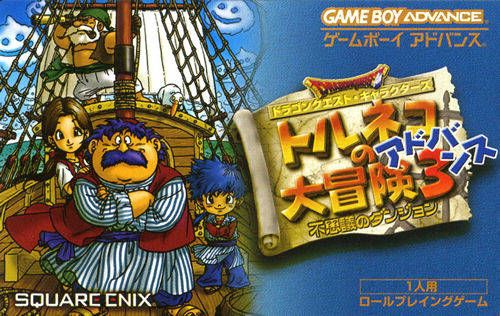
Authentic Torneko 3 cartridges feature Akira Toriyama's cover artwork showing Torneko, Popolo, and various Dragon Quest monsters. The cartridge code "AGB-BQ3J-JPN" should appear on labels, with proper Square Enix branding (post-merger), Nintendo seals, and Japanese CERO ratings.
Complete-in-box copies include detailed instruction manuals, link cable multiplayer guides, and rescue system explanations in Japanese. Some limited editions bundled promotional materials or strategy supplements.
The game's position as the GBA Mystery Dungeon trilogy's conclusion and the tag system's innovation create strong collector demand. For Dragon Quest completionists and roguelike enthusiasts, Torneko 3 represents essential preservation despite language barriers.
Legacy and Impact
Torneko 3 represents the GBA Mystery Dungeon peak—refined mechanics, extensive content, innovative multiplayer, and technical polish culminating the trilogy. Its influence extends beyond the series:
Mystery Dungeon Evolution: Future entries adopted the tag system, synthesis depth, and multiplayer frameworks pioneered here.
Pokémon Mystery Dungeon: The 2005 DS Pokémon Mystery Dungeon borrowed heavily from Torneko 3's systems while simplifying for younger audiences.
Roguelike Design: The rescue code system influenced community-driven roguelike features in modern games.
Portable Roguelikes: Demonstrated handheld platforms could deliver console-quality roguelike experiences.
Torneko 3's Japan-exclusivity prevented broader recognition, but for those who experienced it, the game represents roguelike perfection—punishing yet fair, deep yet comprehensible, challenging yet rewarding. It stands as a monument to an era when games could target niche hardcore audiences unapologetically, creating experiences valuing mastery over accessibility.
Final Assessment
Dragon Quest Characters: Torneko's Adventure 3 crowns the GBA Mystery Dungeon trilogy, offering the deepest systems, most extensive content, and greatest mechanical polish. The tag system, enhanced synthesis, multiplayer integration, and overwhelming dungeon variety create the definitive portable roguelike experience.
For GBA collectors, Torneko 3 represents essential roguelike history and Dragon Quest preservation. Its Japan-exclusive status, trilogy conclusion position, and innovative features create collecting motivations transcending simple gameplay access.
The game rewards dedication with satisfying mastery. Initial confusion yields to strategic appreciation as systems reveal their depth. Players embracing randomness, accepting failures as learning opportunities, and developing strategic expertise discover one of gaming's most rewarding challenges.
Whether approached as Dragon Quest history, Mystery Dungeon evolution, or roguelike excellence, Torneko 3 delivers uncompromising gameplay that respects intelligence while punishing carelessness. It stands testament to focused design philosophy—creating perfect iterations of specific genres for dedicated enthusiasts rather than diluting experiences for mass markets.
For those seeking the ultimate GBA roguelike, where every decision echoes through procedurally-generated floors and every victory represents earned mastery, Torneko's Adventure 3 awaits—the merchant's final and finest dungeon-crawling adventure.
What Members Paid (Anonymous)
No member purchase data available yet. Be the first to add this game to your transactions!
Shopping Assistant
Use our AI-powered shopping assistant to find Dragon Quest Characters: Torneko's Adventure 3 across multiple online marketplaces including eBay, Mercari, Amazon, and more.